
MUSIC STUDIO SOUNDPROOFING
Your music.
Your space.
Better sound control.
Soundproofing for home studios, rehearsal rooms and recording spaces. Plan around the music you make, the room you have and the people nearby.
Practical advice · Room-specific design · Professional installation
BUILT AROUND HOW YOU MAKE MUSIC
Every studio starts with a different room.
A spare bedroom, garage or garden building can present very different soundproofing challenges. We’ll work with you to consider a solution suited to the space and its intended use.
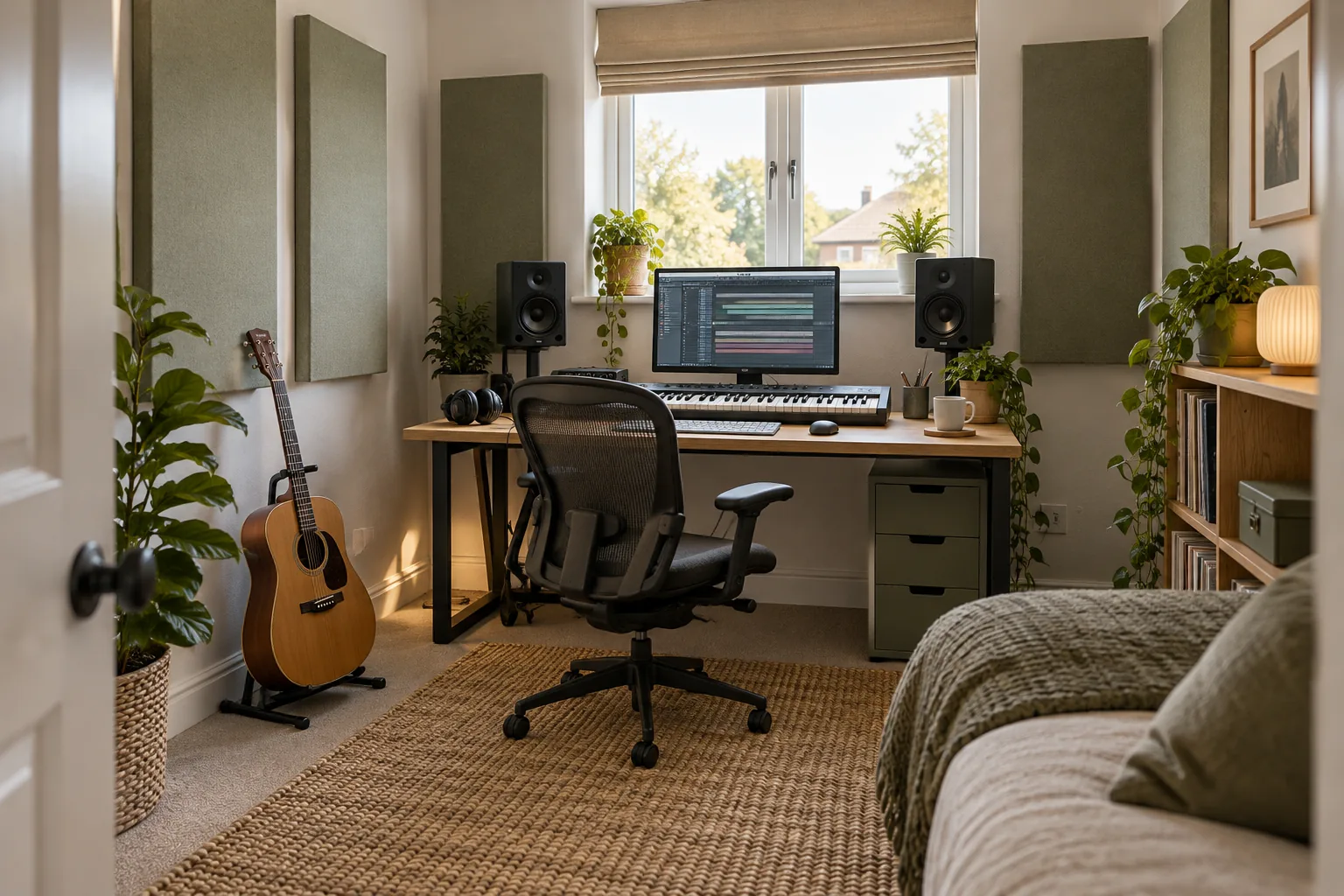
Home studios
Consider neighbouring rooms, outside noise and the space available for a soundproofing build-up, alongside your recording and listening needs.
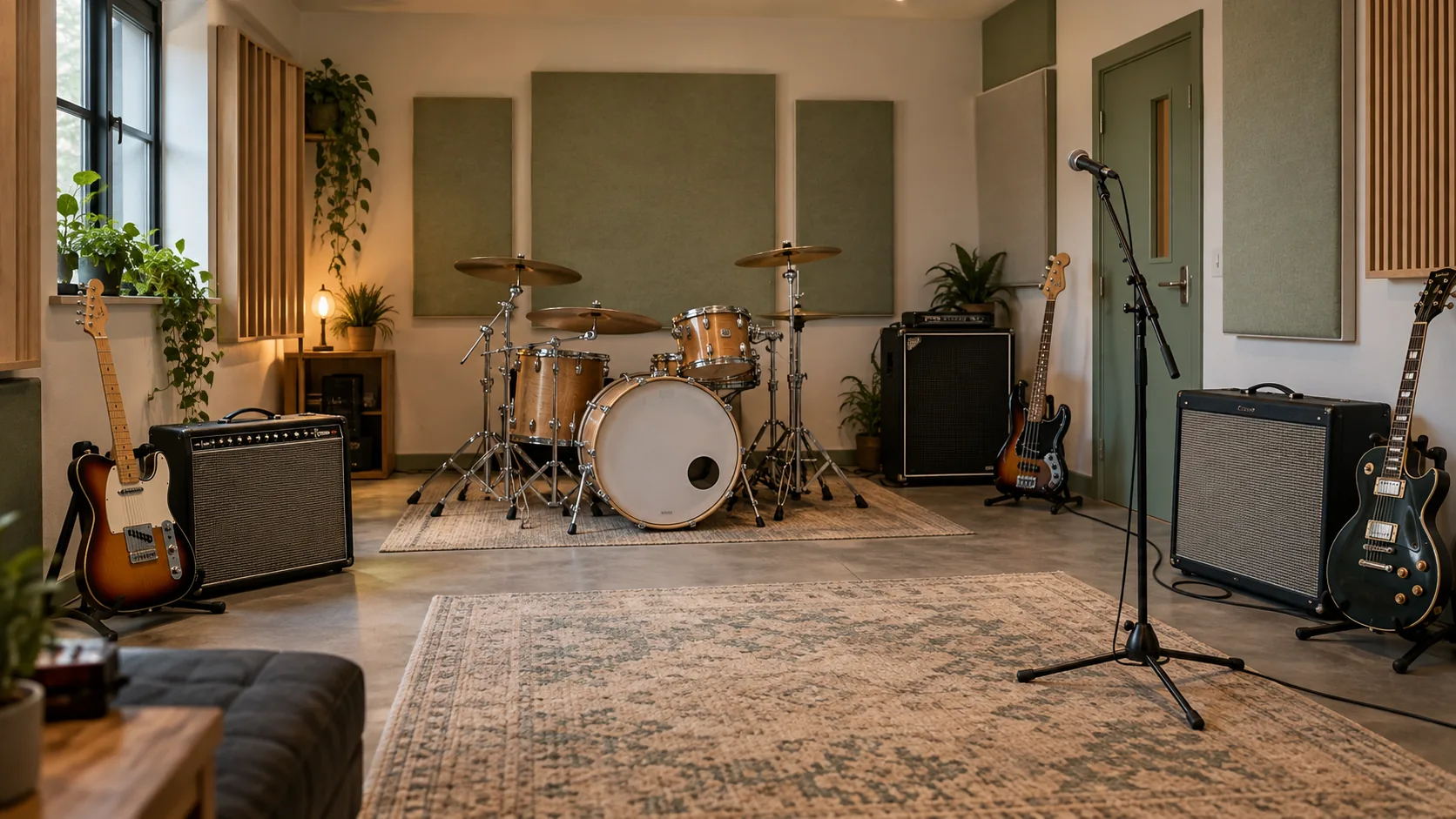
Rehearsal rooms
Live instruments and amplified music need careful planning. Drums and bass can be particularly demanding, so the building and nearby properties matter.
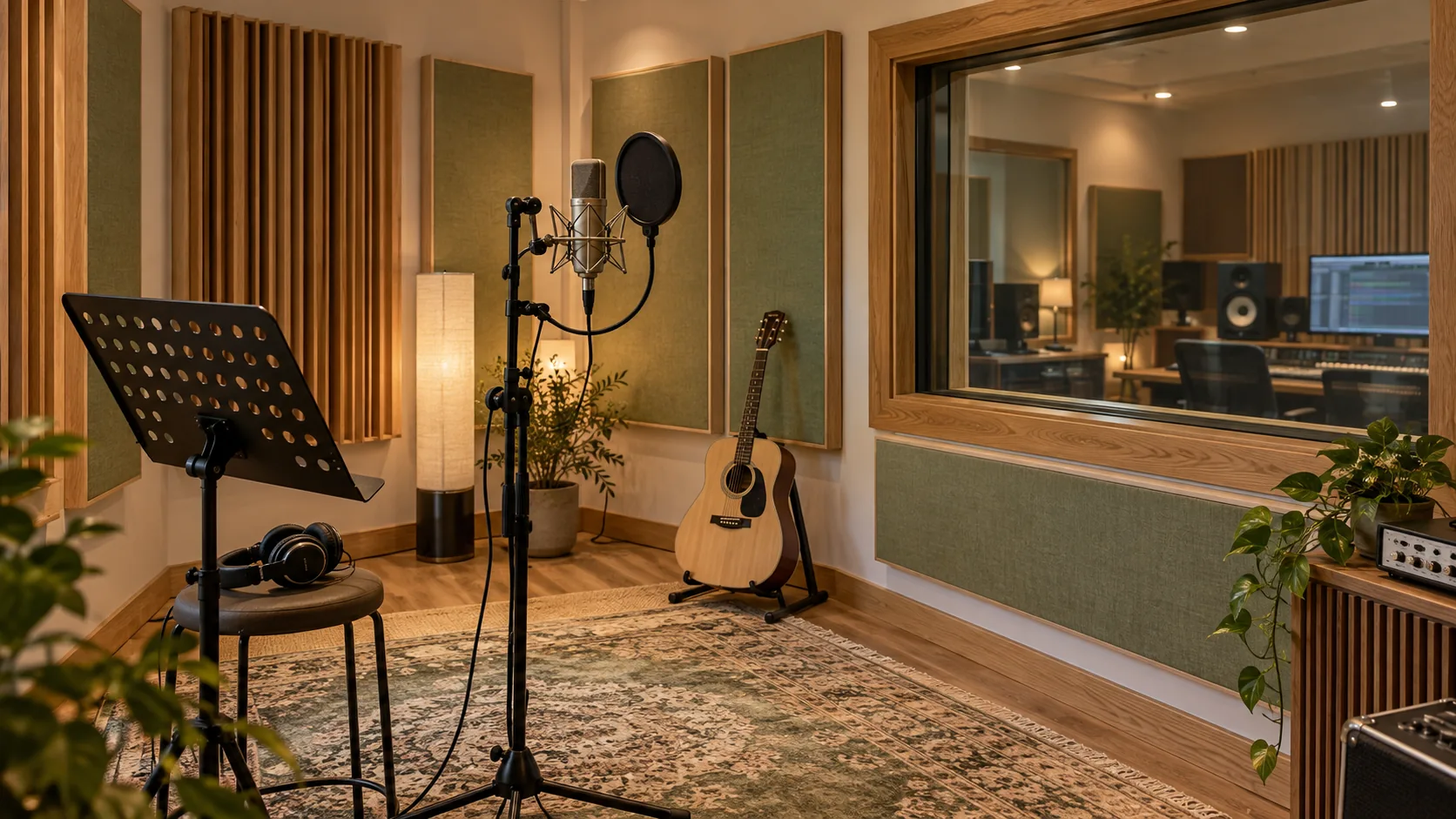
Recording spaces
Manage unwanted noise entering the room, then consider reflections and room acoustics to support recording and listening.
TWO DIFFERENT JOBS
Keep sound in. Improve sound within.
Soundproofing and acoustic treatment work together, but they solve different problems.
BETWEEN ROOMS
Soundproofing
Reduces sound travelling into and out of the studio. The design may involve walls, floors, ceilings, doors and windows, with attention to gaps and sound travelling through adjoining parts of the building.
INSIDE THE ROOM
Acoustic treatment
Controls reflections and reverberation within the room. Appropriate absorption, bass treatment and positioning can help you hear recordings and monitors more clearly.
Acoustic panels alone are not a substitute for soundproofing the room’s structure. Start by identifying which problem you need to solve.
PLAN THE WHOLE ROOM
The details make the difference.
Sound can escape through weak points or travel around a treated surface. Improving one wall may leave other routes untreated.
A studio also needs to be comfortable to use. Doors, ventilation and usable room dimensions should be part of the initial discussion.
Understand the sound
Discuss instruments, recording needs, listening levels and when the room will be used.
Assess the space
Consider construction, neighbouring spaces and the main routes sound may take.
Agree the approach
Discuss appropriate measures, the effect on room size and the installation scope before work begins.
PRACTICAL ANSWERS
Planning your music studio
Start with the room and the way you use it. The right approach depends on both.
Will acoustic panels stop neighbours hearing music?
Panels mainly control sound reflections within a room. Reducing sound reaching neighbours usually requires measures addressing the building structure, openings and other transmission routes.
Can a bedroom, garage or garden room become a studio?
Potentially, but suitability depends on its construction, available dimensions, intended sound levels and nearby spaces. Discuss the room before choosing materials or committing to a conversion.
How much space does soundproofing take?
It depends on the proposed construction. Wall, ceiling and floor systems can reduce usable dimensions, so the available room size needs to be considered before the design is agreed.
Can you guarantee nobody will hear the music?
No room should be described as completely silent outside without evidence. Achievable sound reduction depends on the design, workmanship, existing building and the volume and frequency of the music.
What should I send with my enquiry?
Your postcode, approximate room dimensions, photographs, the instruments or equipment you use, and details of the noise you want to reduce. Let us know which rooms or properties are nearby and whether you have a budget in mind.
Let’s talk about your studio.
Tell us about your space and the music you make. We’ll help you consider the next steps.